

Stain Resistant Covers for Families: 2026 Buying Guide
Table of Contents
- What Families Actually Need From Stain Resistant Covers
- Washable Sofa Covers: Why Machine Washability Matters
- Stain-Resistant Couch Covers: Testing the Limits
- Durable Sofa Covers for Kids: Fabric and Construction
- Waterproof Furniture Covers: What the Label Really Means
- Sizing, Fit, and Sofa Shapes: Getting the Right Cover
- Care, Longevity, and When to Replace Your Cover
- Frequently Asked Questions
Last Updated: October 5, 2026
What Families Actually Need From Stain Resistant Covers
Most families don't need a cover that survives a lab test. They need one that survives Tuesday.
At Magic Fabric™, we build covers around one idea: liquid should never pool on the surface or soak through to the cushion.
Here's what most buying guides get wrong. They rank covers by thread count or price and skip the three things that actually matter to a household with kids and pets:
- Absorption vs. repelling. A cover that repels liquid sends it somewhere. Usually your rug.
- Odor control. Stain resistance means nothing if the cover holds a smell after washing.
- Fit that survives daily life. A cover that bunches up every time someone sits down gets pulled off within a week.
Below, we break down how to judge stain-resistant couch covers by fabric, fit, washability, and realistic limits, so you can pick one that lasts past the first spill.
Washable Sofa Covers: Why Machine Washability Matters
Machine washability is the single most important feature of any family sofa cover, but not for the reason most guides give. The real reason is that stain resistance is a surface property, and surfaces get contaminated.
The practical test is simple. Ask three questions before buying:
- Does the care label say machine wash cold and tumble dry low?
- Can you remove and reinstall it alone, without tools?
- Does the fabric hold its shape after repeated washing?
Covers that need spot cleaning only, or hand washing, tend to get cleaned less often. That's the real failure mode. Families skip the chore when it's a hassle, and the cover quietly stops doing its job.
What Actually Happens to a Cover in the Wash
Laundering is abrasive, and the damage is cumulative. A common pattern across fabric care guidance is that three things wear a cover down over repeated cycles:
- Heat. Hot water and high dryer temperatures can shrink backing layers and relax elastic, which is why a cover that fit snugly in month one slides in month six.
- Agitation. The tumbling and friction that lift soil also abrade fibers, producing the pilling and thinning you see first at seat edges and armrests.
- Residue from detergent and softener. Fabric softener coats fibers with a waxy film that reduces absorbency, the opposite of what you want from a cover whose job is to take liquid off the surface. Skip it.
This is why cold wash and low dry aren't just gentler, they're the two habits that preserve both fit and function longest.
A Realistic Cleaning Schedule
How often you wash depends on the household, not the calendar alone:
- Pet households: roughly monthly, plus immediately after any accident.
- Households with young kids: every six to eight weeks, plus after illness or a major spill.
- Low-mess households: every two to three months is usually enough.
Shake the cover out weekly between washes. Loose crumbs and pet hair work into the weave and act like sandpaper against the fibers every time someone sits down.

Washability Is Also Sofa Protection
A washable cover protects the sofa underneath in a way spot cleaning can't. Every full wash removes the soil that would otherwise migrate through the cover's fibers into your upholstery.
One caveat worth checking before you buy: confirm the cover can go in a standard residential washer. Oversized sectional covers sometimes exceed the drum capacity of a typical home machine, which pushes families toward commercial laundromats, and a cover that's inconvenient to wash is a cover that stops getting washed.
Stain-Resistant Couch Covers: Testing the Limits
No stain-resistant couch cover is stain proof, and any product claiming otherwise is overselling.
Here's how to test a cover's real limits before you commit:
- The dwell test. Pour a small amount of water on the cover and watch. Instant absorption is better than beading, because beading liquid rolls into seams and cushion gaps.
- The pressure test. Blot with a paper towel. If moisture wicks through under firm pressure, the cover will fail under a sitting child.
- The wash test. After laundering, does the cover still absorb, or has the finish washed out?
The limits matter most with the messes families actually face: urine, milk, juice, and pet accidents. Urine is the hardest, because it carries both moisture and odor.
This is where fabric transparency matters. PFAS chemicals have been used for water and stain repellency in textiles, and the EPA's research on PFAS in consumer products explains why regulators and manufacturers have moved away from them.
Durable Sofa Covers for Kids: Fabric and Construction
Durability in a family cover comes down to three things: fiber type, backing, and stitching.
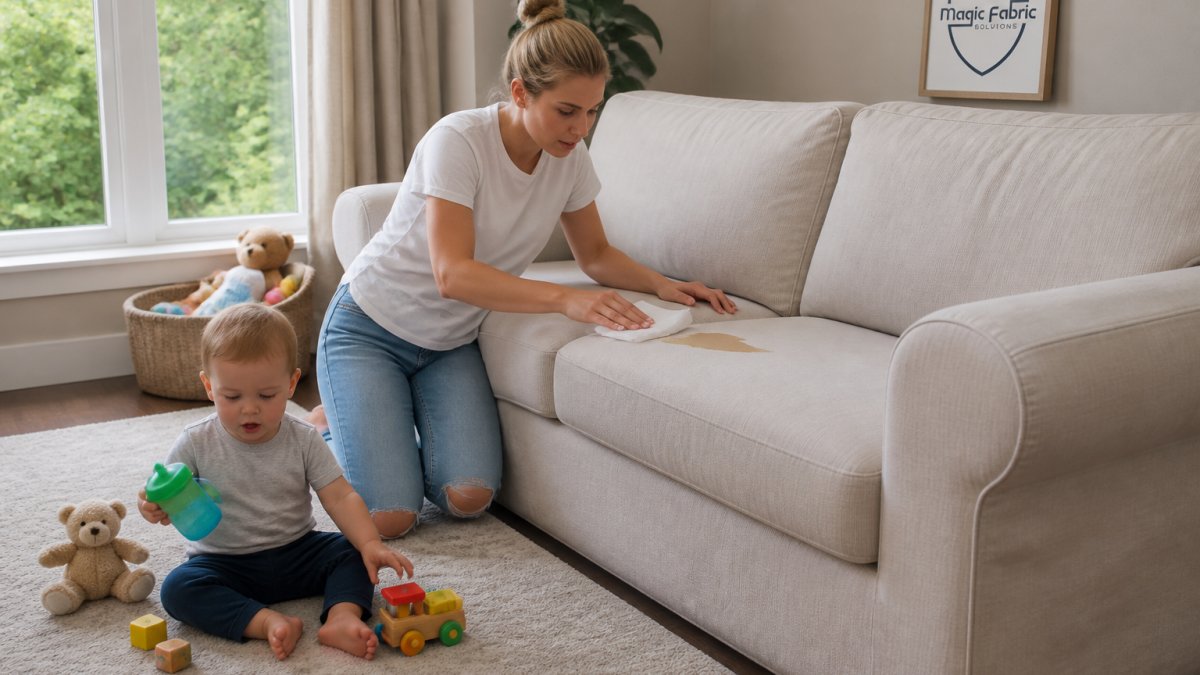
Look at construction details, not marketing claims:
| Feature | What to Look For | Why It Matters |
|---|---|---|
| Fiber | Tightly woven polyester or chenille | Resists pilling and pulls |
| Backing | Silicone or non-slip grip | Stops bunching and sliding |
| Stitching | Double-stitched seams | Survives repeated washing |
| Weight | Substantial hand feel | Holds shape, drapes better |
A common mistake is buying a cover that's soft but thin. Thin covers feel nice in the store and fail within months under daily family use.
Pet Furniture Throws & Covers →
Fade resistance and breathability round out the picture. A breathable cover won't trap heat against the sofa, which matters for leather upholstery and for anyone sitting for long stretches.
Waterproof Furniture Covers: What the Label Really Means
"Waterproof" on a furniture cover label can mean three different things, and only one of them protects your sofa. Water-resistant covers slow liquid down. Water-repellent covers make liquid bead and roll.
The distinction matters because beading and rolling send liquid off the cover and onto whatever is underneath.
A waterproof furniture cover should also handle odor, not just moisture. Urine and milk both carry compounds that linger in fabric.
Magic Fabric™ backs its covers with a 30-Day Leak-Proof Guarantee, which is the kind of claim you can actually hold a product to. If liquid reaches your furniture, the cover didn't do its job.
Sizing, Fit, and Sofa Shapes: Getting the Right Cover
Fit is where most cover purchases go wrong, and it's the hardest thing to fix after the fact. A cover that's too small pulls at the seams and exposes corners. One that's too large bunches under cushions and slides every time someone sits down. The difference between a cover that stays put for years and one that gets yanked off in a week is almost always measurement, not fabric.
How to Measure Your Sofa
Measure the sofa, not the old cover, and measure with the cushions in place. Use a soft tape and write the numbers down:
- Seat width: armrest to armrest across the front edge of the seat cushions.
- Seat depth: front edge of the seat cushion to the backrest, measured at the cushion's deepest point.
- Back height: top of the seat cushion to the top of the backrest.
- Arm height and width: from the floor to the top of the arm, and the arm's thickness front to back.
- Overall length: outside edge of one arm to the outside edge of the other, along the floor line.
For a sectional, measure each section separately and note whether the corner is a wedge or a square. A single cover rarely fits a sectional cleanly; most families need a cover sized per section plus a dedicated corner piece.
Match the Cover to the Sofa Shape
Sofa shape matters as much as size, and this is where generic covers fail:
- T-cushion sofas. The seat cushions wrap around the front of the arms, creating a notch. Standard rectangular covers leave gaps at those front corners, and gaps are exactly where crumbs and liquid collect. Look for a cover cut specifically for T-cushion geometry.
- Rolled vs. square arms. Rolled arms need a cover with enough drape to follow the curve; square arms need a cover with structured corners so it doesn't sag. A cover designed for one will look sloppy on the other.
- Sectionals. L-shaped and U-shaped configurations need per-section coverage. A stretch cover that claims to fit 'most sectionals' usually fits none of them well.
- Recliners and lift chairs. These pieces move, so the cover has to stay anchored through the full range of motion without catching in the mechanism. Check that the cover is rated for adjustable furniture rather than a fixed sofa.
The Fit Trade-Off Nobody Mentions
There's a real tension between a snug fit and easy removal. Stretch covers hug the sofa and look tailored, but they're harder to get on and off, which means they get washed less often. Loose draped covers are easy to remove but slide and bunch. The compromise most families land on is a fitted cover with a non-slip backing, snug enough to stay put, removable enough to launder monthly without a fight.
When to Size Up
If your measurement falls between two sizes, size up rather than down. A slightly large cover can be tucked and anchored; a slightly small cover will pull at the seams, expose corners, and fail at the stress points within weeks. The one exception is stretch covers, which should match your measurements closely because they rely on tension to stay in place.
Care, Longevity, and When to Replace Your Cover
A well-made cover lasts years, not months, if you care for it correctly. The routine is short: shake it out weekly, wash it monthly in cold water, and tumble dry on low.
Signs it's time to replace a cover:
- Absorption has slowed noticeably after washing
- The backing has lost its grip and the cover slides constantly
- Seams are pulling or the fabric has thinned at high-contact spots
- Odor returns within a day or two of washing
Most covers reach this point because of wash-cycle damage, not spills. Hot water and high heat break down performance fibers and backing over time. Cold wash and low dry are the two habits that extend a cover's life the most.
For pet households, the calculus is different.
Frequently Asked Questions
What features should families look for in stain resistant covers?
Prioritize machine washability, a non-slip backing, and fabric that absorbs liquid rather than letting it bead on the surface. Check whether the cover is PFAS-free and skin-safe, since kids and pets spend hours on it. Look for a snug fit on T-cushion sofas and recliners, plus a stated warranty or leak guarantee. Magic Fabric's pet throws, for example, are waterproof, odor-resistant, and machine washable, with a 30-Day No Leak Guarantee.
Are washable sofa covers practical for families with kids?
Yes, if you pick covers designed for frequent laundering. Washable sofa covers let you remove and clean spills the same day instead of spot-treating upholstery. Look for covers that survive cold-water washes and low-tumble drying without fading or shrinking. Families with young children typically wash covers weekly or after any major spill. A reusable cover that holds up to repeated washing costs less over time than replacing stained upholstery or buying disposable protectors.
How do you clean a stain-resistant sofa cover?
Most stain-resistant couch covers are machine washable. Remove the cover, shake off loose debris, and wash cold on a gentle cycle with mild detergent. Avoid fabric softener, which can coat performance fibers and reduce absorbency. Tumble dry low or air dry. For urine or odor, wash promptly so the odor doesn't set. Magic Fabric covers are designed to lock in liquid and odor until washed, so a standard cold wash restores them for reuse.
Are waterproof furniture covers safe for pets and children?
Safety depends on the materials and treatments used. Look for covers labeled PFAS-free, non-toxic, and skin-safe, since PFAS chemicals have been linked to health concerns by the EPA. Breathable fabrics reduce heat buildup and irritation. Magic Fabric products are PFAS-free, antimicrobial, and third-party tested. A waterproof cover that absorbs liquid instantly (rather than letting it pool) also reduces slip risk for kids and pets walking across the surface.
Families shouldn't have to choose between a couch that looks good and one that survives real life. Magic Fabric™ builds patented covers that absorb liquid instantly, lock in odor including urine, and wash clean in a standard machine cycle. Our covers are PFAS-free, skin safe, and backed by a 30-Day Leak-Proof Guarantee, so you can protect your furniture without covering it in plastic. Shop now and stop worrying about the next spill.