

Best Furniture Covers for Kids: 2026 Parent Guide
Table of Contents
- What Makes a Furniture Cover Kid-Ready
- Comparison Table: Top Furniture Covers for Kids
- Washable Couch Covers for Kids: What to Look For
- How to Protect Furniture from Kids: A Practical Framework
- Fit and Installation: Sofas, Sectionals, and Recliners
- Long-Term Maintenance and Fabric Degradation
- Frequently Asked Questions
Last Updated: September 18, 2026
What Makes a Furniture Cover Kid-Ready
Furniture covers for kids need three things above all else: they must absorb liquid instead of letting it pool, stay put under jumping and climbing, and survive repeated washing without falling apart. Most covers sold as "waterproof" fail at least one of these tests.
Here's the distinction that matters. Waterproof covers repel liquid, which sounds ideal until a spill sits in a puddle on top of the fabric while you scramble for a towel. Absorbent covers pull liquid into the fabric and hold it there until you wash it out. For juice, milk, and accidents, absorption wins because there's nothing left to spread.
Magic Fabric™ built its patented fabric around that principle: liquid hits the surface, gets absorbed instantly, and stays locked inside until laundry day.
Liquid Absorption vs. Waterproof Barriers
A waterproof barrier is a plastic sheet with a fabric face. It stops liquid from reaching your cushions, but the liquid has nowhere to go, so it beads, rolls, or pools. On a sofa, that means a spill can run between cushions and down the sides before you catch it.
An absorbent cover works differently. The top layer pulls liquid inward, and a backing layer holds it. No puddles, no runoff.
Safety Certifications: PFAS-Free and Skin-Safe
This is the part most buying guides skip entirely. Many stain-resistant and waterproof textiles are treated with PFAS, a class of chemicals linked to health concerns and increasingly restricted by state regulators. The EPA's PFAS research and regulation hub explains why these compounds have drawn scrutiny.
Comparison Table: Top Furniture Covers for Kids
Here's how cover types stack up against the features that matter most with young children in the house.
| Cover Type | Liquid Handling | Odor Control | Machine Washable | Best For |
|---|---|---|---|---|
| Absorbent performance fabric | Instantly absorbs, locks in | Yes, locks odor until washed | Yes, quick-dry | Spills, accidents, pets |
| Standard waterproof pad | Repels, can pool | Limited | Varies | Light occasional use |
| Quilted polyester throw | Slows absorption | No | Yes | Aesthetics over protection |
| Non-slip fitted cover | Varies by brand | Varies | Yes | High-traffic seating |
Washable Couch Covers for Kids: What to Look For
Washable couch covers for kids should be machine washable in cold water, quick to dry, and durable enough to handle weekly laundering without pilling, fading, or losing their absorbency. If a cover needs special handling, it won't get washed often enough to stay hygienic.
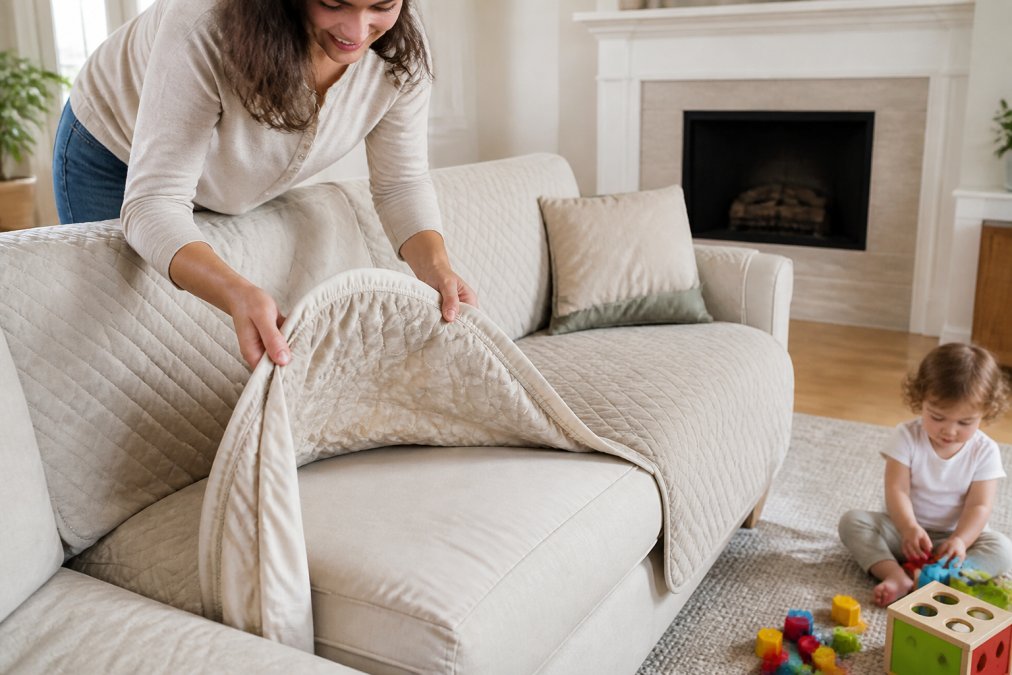
- A durable weave that holds up to friction from kids climbing on and off
- An elastic hem or non-slip backing so the cover stays anchored
- Quick-dry fabric so a washed cover is back on the couch the same day
Machine Washable Materials and Quick-Dry Fabrics
Cold-water washing protects the absorbent layer, and low-heat drying prevents shrinkage. A common mistake is washing on hot to sanitize. That shortens fabric life and can damage the waterproof backing on any cover, not just this one.
How to Protect Furniture from Kids: A Practical Framework
Knowing how to protect furniture from kids comes down to a simple three-layer approach: absorb the spill, anchor the cover, and wash on a schedule. Skip any layer and the protection breaks down.
Here's the framework worth following:
- Contain the mess. Choose an absorbent cover that locks liquid in rather than repelling it.
- Secure the fit. Use elastic hems or non-slip backing so the cover doesn't bunch when kids climb.
- Rotate and wash. Keep two covers in rotation and launder weekly.
- Check the label. Confirm PFAS-free and skin-safe claims before buying.
- Match the cover to the furniture. Recliners and sectionals need different fits than a standard sofa.
Fit and Installation: Sofas, Sectionals, and Recliners
Fit is where most covers fail. A cover that's too loose bunches under kids; one that's too tight strains the seams. Measure your furniture before buying, and check the dimensions against the product listing. Precision in these measurements ensures that the fabric remains secure even when household activity increases, a principle that also applies when selecting durable furniture for pets.
- Sofas: measure seat width and back height, then add a few centimetres for tuck-in
- Sectionals: look for modular designs or per-seat covers
- Recliners and lift chairs: confirm the cover works with moving parts, since a rigid cover can jam the mechanism
Long-Term Maintenance and Fabric Degradation
Every fabric degrades with use, and covers are no exception. The enemies are heat, harsh detergent, and skipping washes. Odor compounds left in the fabric break down fibers over time, which is why a cover that smells stays compromised even after it looks clean.
How Performance Fabric Actually Wears Out
An absorbent cover has two jobs: pull liquid in, and hold it until laundry day. Those two jobs fail in different ways.
- The top layer loses its wicking ability. Detergent residue, fabric softener, and dryer sheets coat the fibers and block absorption. The cover still looks fine, but liquid starts sitting on the surface instead of soaking in. This is the most common failure, and it is almost always caused by softener, not by age.
- The backing layer stops holding. The inner barrier that traps liquid eventually delaminates or cracks, usually from repeated high-heat drying. Once the backing is compromised, liquid passes straight through to the cushion.
- The elastic goes slack. Elastic hems lose recovery with heat exposure. A cover that used to snap tight starts sliding off the seat, which is the first thing kids will exploit.
- Color fades unevenly. Sun exposure through a window fades the seat-facing panels faster than the tucked-in edges, so the cover looks blotchy long before the fabric is worn out.
The Wash-Count Reality
A cover used on a family couch with a toddler typically gets washed weekly, sometimes more. Over a year that is 50-plus wash cycles. Most performance fabrics are engineered to hold their absorbency and color through that range, but only if the care routine is right. The covers that fail early almost always fail because of heat or softener, not because they hit some magic wash number.
A practical routine that protects all four failure points:
- Wash cold, on a normal cycle. Hot water is the fastest way to shrink fabric and stress the backing.
- Skip fabric softener and dryer sheets entirely. They coat the fibers and kill absorbency. This is the single biggest mistake people make with performance fabric.
- Tumble dry low, or air dry. If you can air dry, do, it is the gentlest option for both the elastic and the backing.
- Use a mild, residue-free detergent. Heavy-duty or bleach-based detergents break down fibers faster than a standard gentle formula.
- Spot-clean between washes. Blot, don't rub. Rubbing pushes liquid deeper and roughens the surface.
- Keep two covers in rotation. Alternating spreads the wear and means the couch is never bare while one is in the wash.
How to Tell When a Cover Has Actually Failed
Before you replace a cover, run this quick test. Pour a small amount of water on an inconspicuous corner and watch what happens.
- It soaks in and disappears. The cover is still working. Wash it and put it back.
- It beads and rolls off. The absorbent layer is coated, usually softener residue. Strip it with a warm wash and no detergent, then re-test.
- It soaks through to the other side within a minute or two. The backing has failed. This cover is done protecting your cushions.
- The elastic no longer snaps back. The cover will not stay put under kids. Time to replace.
Frequently Asked Questions
What is a good kid-proof sofa cover?
A good kid-proof sofa cover absorbs liquids instantly, resists stains, and stays put during climbing and jumping. Look for features like a non-slip backing or elastic hem, machine washable fabric, and odor resistance. Magic Fabric's patented throw absorbs spills on contact and locks in odor until you wash it. It fits most sofas and recliners and comes with a 30-day leak-proof guarantee.
How do I keep furniture covers from sliding off?
Covers slide when the backing is smooth or the fit is loose. Choose covers with a non-slip backing, elastic hem, or stretch fabric that grips cushions. For extra hold, tuck excess fabric into the crease between the seat and backrest. Magic Fabric's throw stays in place, even on recliners that move and adjust.
Are washable couch covers worth it for families?
Yes, washable covers save money and extend furniture life. Spills, crumbs, and accidents happen daily with kids. A machine washable cover lets you clean messes in one wash cycle instead of spot-treating upholstery or paying for professional cleaning. Magic Fabric's cover is machine wash cold, tumble dry low, and reusable, so it holds up to frequent washing without losing absorbency.
What kind of fabric is best for couches with kids?
High-stretch, breathable fabrics with a waterproof layer work best. They fit snugly, resist spills, and feel soft against skin. Avoid loose weaves that snag or thin covers that bunch. Magic Fabric uses a patented performance fabric that absorbs liquid instantly, locks in odor, and is PFAS-free and skin-safe. It is also durable enough for daily use.
Kids will spill, climb, and test every surface in the house. The right cover means you stop guarding the couch and start living on it. Magic Fabric™ makes patented, PFAS-free furniture covers and throws that absorb liquid instantly, lock in odor, and stay soft through repeated washing, backed by a 30-Day Leak-Proof Guarantee. Get started with Magic Fabric™ and protect your furniture without giving up the look of your home.