

7 Ways to Hide Pet Supplies in Your Living Room
Last Updated: November 8, 2026
Quick Summary
To hide pet supplies in your living room, create one designated pet hub in a corner near where your pet actually spends time, then conceal it inside furniture that looks like decor, such as lidded ottomans, storage coffee tables, or cabinets with solid doors. Sort supplies by how often you use them so daily items stay accessible and rare gear goes up high or in another room.
- Sort supplies into daily, weekly, and rare piles before buying any storage.
- Store food in an airtight, food-grade container sized to one to two weeks of supply.
- Keep medications and cleaning products locked or high, never in the toy bin.
- Renters can hide supplies with freestanding shelves, adhesive hooks, and lidded ottomans.
- Keep the walking station at hip height so you aren't bending every morning.
Table of Contents
- Start With a Designated Pet Hub, Then Conceal It
- How to Organize and Store Pet Supplies by Type
- Pick a Dog Supply Storage Cabinet That Blends In
- Dog Stuff Organizer Ideas for Toys, Leashes, and Grooming Gear
- Build a Walking Station and Feeding Station Near the Entryway
- How to Hide Pet Supplies in the Living Room DIY: Renters and No-Drill Setups
- Protect the Furniture the Supplies Sit On
- Shop Covers and Storage That Keep Your Living Room Tidy
- Frequently Asked Questions
Start With a Designated Pet Hub, Then Conceal It
Learning how to hide pet supplies in living room spaces starts with one smart move: pick a single zone for everything your pet needs, then hide that zone inside furniture that looks like decor.
A pet hub is one designated spot that holds all of your pet's daily gear in one place. It keeps supplies contained, easy to reach, and out of sight.
Where should the hub go? Choose a corner near where your pet actually spends time, not the spot that looks best in photos.
- Humane Society pet care resources recommends keeping pets' essentials consistent and accessible
- Pick a corner, a wall, or the space beside a couch
- Make sure the spot sits within arm's reach of where you sit
Sort Supplies by Frequency of Use
Before you buy anything, empty every pet item onto the floor and sort it into three piles:
- Daily: leash, harness, food scoop, water bowl, favorite toys
- Weekly: grooming brush, nail clippers, paw wipes, extra treats
- Rare: travel crate, seasonal sweaters, backup food bags
Daily items go in the most accessible storage. Rare items go up high or in another room entirely. This one step prevents the classic problem of a storage bench crammed with winter coats while the leash lives on the floor.
How to Organize and Store Pet Supplies by Type
Organizing pet supplies by type means grouping food with food, toys with toys, and grooming gear with grooming gear, then matching each group to a container that fits it.
Grouping by type beats grouping by pet when you have more than one animal. Shared bowls and towels serve everyone. Separate the prescription food, though, or you will mix them up at 6 a.m.
- Toys: one lidded basket, rotated monthly so the collection feels new
- Grooming: a handled caddy that moves to the bathroom
- Cleaning: towels, enzyme cleaner, and wipes in one lidded bin
Separate Daily, Bulk, and Occasional Supplies
A common pattern is to sort by type first, then by how often you reach for it. Daily items (leash, scoop, favorite toy) belong in the most accessible container.
Watch out: storing a full food bin right beside a water bowl invites spills and soggy kibble, so leave some distance and keep the scoop inside the food container, not loose in a drawer.
Choose Pet-Safe Materials and Containers
The container matters as much as the contents. Choose bins and canisters with lids that seal, made from hard plastic or metal rather than thin flexible plastic a determined chewer can puncture. Avoid containers that previously held cleaning products or chemicals, even after washing, because residue can linger. Keep medications, cleaning supplies, and small choking hazards such as broken toy parts out of low, open baskets.
Build In Odor, Spill, and Cleaning Routines
Visual clutter is only half the problem. Washable liners in toy and grooming bins catch fur and drool and can go in the laundry weekly. Sealed food containers prevent spills and stale kibble under the couch. Keep a small moisture-absorbing pack in closed bins that hold damp toys or towels, and wipe hard containers monthly. For messes that happen around stored supplies, our guide to pet accident cleanup walks through removing urine, stains, fur, and odor from furniture.
Food, Treats, and Airtight Containers
Food and treats belong in airtight containers, not in the bag they came in. Open bags tip over, spill kibble under the couch, and let dry food go stale. A sealed container also keeps curious noses out.
Store food in a closed container sized to one to two weeks of supply so it stays fresh. Keep treats in a smaller matching canister on a shelf. Label the container with the date you opened the bag so you can rotate older food first.
Group each type of supply with a container that fits it, then keep it out of reach where needed.
| Supply type | Container | Note |
|---|---|---|
| Toys | One lidded basket | Rotate monthly so the collection feels new |
| Grooming | A handled caddy | Moves to the bathroom |
| Cleaning | One lidded bin | Holds towels, enzyme cleaner, and wipes |
| Walking gear | Hooks or a drawer near the door | Keeps leash and harness grab-ready |
| Medications and supplements | Locked or high, out-of-reach container | Never in the toy bin |
| Food and treats | Airtight, food-grade container | Sized to one to two weeks of supply |
Pick a Dog Supply Storage Cabinet That Blends In
The best dog supply storage cabinet is one that looks like living room furniture and opens to reveal organized gear. Low media consoles, lidded benches, and slim corner cabinets all work if the doors close completely.
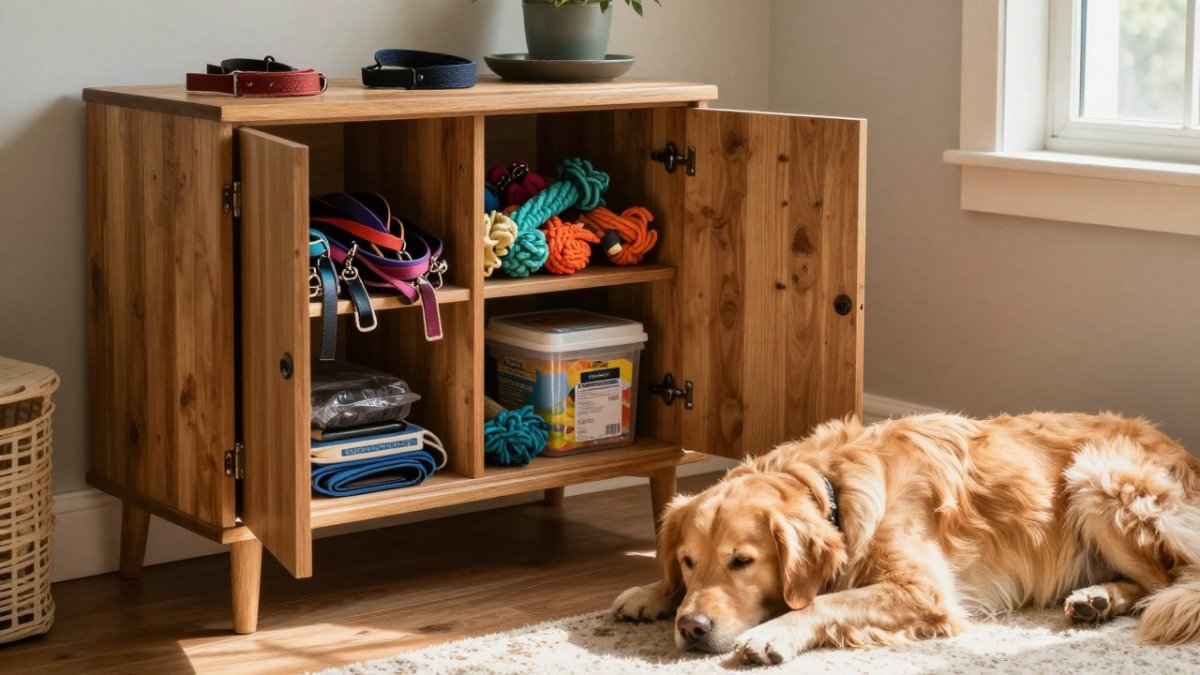
Measure the space before you shop. Then check three things:
- Door style: solid doors hide clutter better than glass
- Interior height: tall enough for a food bin with the lid on
- Ventilation: food stays fresher in a cabinet that isn't sealed tight
A cabinet with adjustable shelves adapts as your pet's gear changes. If you want covers that keep the surrounding furniture tidy too, see our washable furniture covers for dogs guide.
Dog Stuff Organizer Ideas for Toys, Leashes, and Grooming Gear
Good dog stuff organizer ideas share one trait: each item has a labeled home, and that home closes. Labels matter more than people expect. Unlabeled bins become junk drawers within a month. What most lists miss is that the right organizer depends on your room size, whether you rent, and how much you want to spend, so the ideas below are grouped that way.
Try these core organizers first:
- Decorative baskets with lids for toys, one per room
- A drawer divider in an end table for nail clippers and brushes
- Adhesive hooks inside a cabinet door for leashes
Rotate toys rather than piling them all out. Fewer toys on the floor means less to trip over and a tidier room.
Layouts by Living-Room Size
A small apartment living room benefits from vertical, closed storage: a slim corner cabinet, a lidded ottoman that doubles as seating, and over-door hooks that use wasted space without adding floor clutter. An open-plan room needs zones that read as furniture, such as a low media console with solid doors for toys and a storage coffee table for leashes and brushes, so pet gear does not visually merge with the dining area.
Renter and No-Drill Setups
Renters can hide pet supplies without drilling a single hole. Freestanding shelves with fabric bins, a decorative trunk at the end of the couch, a lift-top storage coffee table, and removable adhesive hooks on the inside of a closet door all work without permanent installation. Skip anything that needs wall anchors. Removable adhesive strips hold light gear fine and come off clean at move-out.
Budget and DIY Trade-Offs
Low-cost repurposed containers, such as lidded storage boxes or a sturdy basket you already own, cost little and take minutes to deploy but offer less capacity and may not seal well. DIY furniture modifications, like adding a divider inside an end-table drawer or lining a cabinet shelf, take an afternoon and fit your space precisely but require tools and some skill.
Build a Walking Station and Feeding Station Near the Entryway
A walking station is a small zone by the door that holds the leash, harness, bags, and paw wipes so you can grab everything in one motion. A feeding station is a mat with bowls that stays put and wipes clean.
Both belong near the entryway or a mudroom corner. Keep the walking station at hip height so you aren't bending every morning. Watch out: hanging a leash on a high hook seems tidy, but it slows down every single walk and you'll start leaving it on the floor again.
For the feeding station:
- Use a silicone mat under the bowls to catch splashes
- Choose bowls that fit inside a low drawer or cabinet when not in use
- Keep the food scoop inside the food container, not loose in a drawer
How to Hide Pet Supplies in the Living Room DIY: Renters and No-Drill Setups
Renters can hide pet supplies without drilling a single hole. This how to hide pet supplies in living room DIY approach relies on freestanding furniture and removable adhesive.
Renter-friendly options:
- A lidded storage ottoman doubles as seating and hides toys
- A storage coffee table with a lift top holds leashes and brushes
- Command-style hooks on the inside of a closet door
Skip anything that needs wall anchors. Removable adhesive strips hold light gear fine and come off clean at move-out. For older adults or anyone with mobility limits, choose storage at waist height with wide handles, and avoid deep bins that require reaching to the bottom.
Protect the Furniture the Supplies Sit On
Every storage piece in this guide sits on furniture that pets also use. Couches collect fur, drool, and the occasional accident, and that's before you add a bin of toys beside them.
A washable, waterproof throw solves this without changing how the room looks. Magic Fabric™ throws use patented fabric technology that absorbs liquid on contact and locks odor inside until you wash it out.
If your cover slides around, our guide to stopping furniture covers from slipping covers seven fixes. And when you're ready to shield the couch itself, browse pet furniture throws and covers made for exactly this job.

Shop Covers and Storage That Keep Your Living Room Tidy
A tidy living room comes down to two things: closed storage for the gear and a protective layer on the furniture underneath it. You can set up the hub, sort by frequency, and label every bin, but a leaky food bag or a wet toy will still find the couch.
That's the gap our covers fill. Magic Fabric™ throws start at $99.00 and carry a 30-Day No Leak Guarantee, so you can test them against your own pet's messes.
Ready to finish the job? Browse the full range of washable, waterproof covers and pick the size that fits your couch.
Hiding pet supplies only works when the gear has a closed home and the furniture beneath it has protection.
Frequently Asked Questions
How do I hide dog toys in the living room without buying new furniture?
Use what you already own. A lidded decorative basket beside the couch holds toys out of sight, and a lidded storage ottoman doubles as a footrest. Group toys into two sets and rotate them weekly so fewer sit out at once. For renters, adhesive hooks and over-the-door organizers hold leashes and grooming tools without drilling. The goal is closed storage at arm's reach so putting things away takes seconds, not a trip to another room.
What furniture can double as pet supply storage?
Storage benches, coffee tables with lift tops or drawers, end tables with cabinets, and lidded ottomans all work. A dog supply storage cabinet with closed doors hides food bins and bulky gear while matching your decor. Choose pieces with washable or wipeable interiors, since kibble dust and fur collect in corners. Measure your largest food container before buying so the cabinet actually fits it, and keep heavy items in lower drawers for safety.
How often should I wash pet bedding and covers in the living room?
Wash pet throws and covers weekly if your pet sheds heavily or has accidents, and every two to three weeks otherwise. Magic Fabric pet throws are machine washable. Wipe hard storage surfaces and vacuum inside bins monthly to control fur and dust.
How can I organize pet supplies in a small living room?
Go vertical and use closed storage. A narrow cabinet or a bench with internal compartments holds food, treats, and toys in one footprint. Hang a walking station with hooks and a small shelf near the door for leashes and harnesses. Store only daily-use items in the living room and keep backup food and seasonal gear elsewhere. Label bins so family members put things back correctly, and choose pieces on casters or with handles so you can move them for cleaning.
