

How to Stop Furniture Covers from Slipping: 7 Fixes
Table of Contents
- Why Furniture Covers Slip: A Quick Diagnosis
- How to Tuck In Sofa Covers for a Taut Fit
- Grip Strips, Silicone Pads, and Non-Slip Rug Pads
- Upholstery Twist Pins for Slipcovers That Stay Put
- Elastic Straps, Clips, and Hook-and-Loop Fasteners
- Best Stain Proof Sofa Covers and Fabric Choices
- Pet-Proof and Damage-Free Removal Tips
- Maintenance and Readjustment for Long-Term Stability
- Frequently Asked Questions
Last Updated: September 21, 2026
Why Furniture Covers Slip: A Quick Diagnosis
Friction is the whole game: a cover stays put when its underside grips the cushion, and slides when both surfaces are too smooth to hold.
So before you buy anything, find out which of these three problems you have:
- Slick backing on slick upholstery. Polyester covers on leather or microfiber couches slide almost immediately.
- No anchor point. A draped throw has nothing tying it down. Any movement shifts it.
- Wrong size. A cover that's too big bunches in the creases, and bunched fabric walks.
Most people blame the cover, but it's usually the surface underneath. This guide from Magic Fabric™ on how to stop furniture covers from slipping covers various fixes, from a two-minute tuck to pet-proof anchoring, plus damage-free removal.
How to Tuck In Sofa Covers for a Taut Fit
Tucking is the fastest, free fix: push excess fabric into the gaps between the seat cushions and the frame, then smooth outward from the center.
Here's the sequence that works:
- Start at the back center and push fabric down into the rear crease.
- Work outward toward each arm, keeping tension as you go.
- Tuck the front edge under the seat cushion, not over it.
- Lift each seat cushion and press the cover's edge into the gap.
- Smooth from the middle out to remove air pockets.
Tuck the rear and front edges first. The sides last.
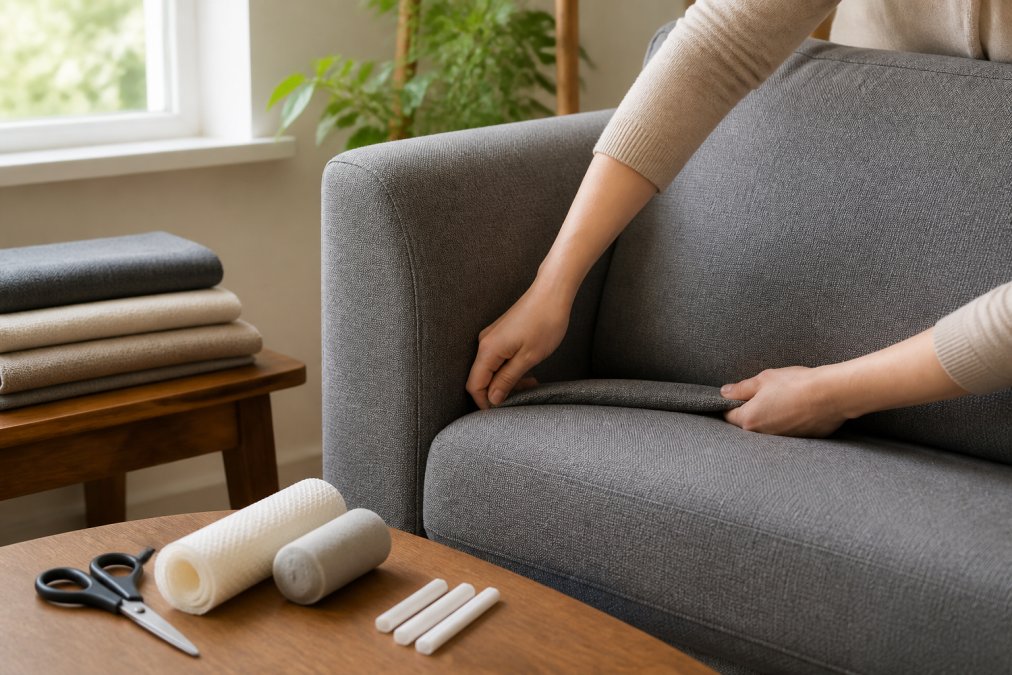
The Tuck-In Method for Cushion Creases
Creases are where covers bunch and slip, so tuck fabric into the crease itself, not just around it.
Use a flat tool, a butter knife, wooden spoon handle, or plastic card. Wrap the fabric edge around it, then push it into the crease so the fabric doesn't fold over on itself.
Work in 6-inch sections. Pull taut, tuck, move on.
Grip Strips, Silicone Pads, and Non-Slip Rug Pads
Grip strips and pads add friction between cover and furniture, and work best on leather, vinyl, and other smooth surfaces where tucking alone won't hold.
Three options, ranked by how well they work:
- Furniture grip strips: Rubber or foam strips placed along the frame edges. Best for sectionals and odd shapes.
- Silicone pads: Small sticky pads at the corners and center. Best for cushions that shift front-to-back.
- Non-slip rug pads: Cut to size and laid under the cover. Best for full slipcovers on slick upholstery.
Cut the pad a half-inch smaller than the cushion on every side. Overhang catches on clothing and rolls up.
One caution: adhesive-backed pads can leave residue on leather. Test a corner first, and check the manufacturer's guidance before applying anything sticky to finished wood or leather. The FTC's guidance on product claims is a useful reminder that "non-slip" labels vary widely, so read the fine print.
Upholstery Twist Pins for Slipcovers That Stay Put
Upholstery twist pins for slipcovers are the strongest hold for fabric that keeps pulling loose: spiral pins that twist into the cushion and grip the cover from underneath.
They work on:
- Loose slipcovers that won't stay tucked
- Cushions with removable covers
- Fabric skirts that flare out at the base
Push the pin through the cover, then twist it into the cushion until the coil catches. Space them 6 to 8 inches apart along the back and side seams. Never place a pin where someone sits directly on it.
The trade-off: pins leave small holes that close up on tight-weave fabric but can tear thin or stretchy fabric. If your furniture is valuable or the fabric delicate, try grip strips first.
Elastic Straps, Clips, and Hook-and-Loop Fasteners
Straps and fasteners hold a cover under tension instead of relying on friction, the most reliable method for covers that get heavy use.
The main types:
- Elastic straps: Run under the cushion or around the frame to pull the cover tight.
- Clips: Grip the cover's edges and connect underneath, common on fitted slipcovers.
- Hook-and-loop fasteners: Sewn or adhered strips that lock two surfaces together.
Hook-and-loop tape works best on outdoor furniture where cushions lift in the wind.
Best Stain Proof Sofa Covers and Fabric Choices
Most guides say pick a tight weave and move on, but the fabric on your furniture dictates which securing method actually works. A method that holds a cotton slipcover taut will slide off velvet, and a grip strip that grips linen can leave residue on leather. Match the method to the fabric first, then worry about stain resistance.
Fabric-by-fabric securing guide
Velvet and velour. The directional pile slides easily one way and grips the other, so tucking alone rarely holds. Use twist pins spaced 6 to 8 inches apart along the back seam, and avoid adhesive grip strips, the adhesive can crush the pile and leave a permanent flat spot. Brush the pile in one direction before tucking.
What actually makes a cover stain-resistant
Stain resistance comes from the weave and backing, not the label. Look for:
- Tight weave: Canvas, twill, and performance knits hold shape and block spills better than loose knits.
- Weight: Heavier fabric stays put and resists wicking. Thin covers slide, bunch, and soak through faster.
- Backing: A textured or rubberized underside grips far better than a smooth one. This is the single biggest factor in whether a cover stays put.
- Fit: Fitted covers with elastic corners beat draped throws every time, on every fabric.
Pet-Proof and Damage-Free Removal Tips
Pets don't just sit on furniture, they launch onto it, scramble off it, and knead it, and each motion stresses a cover differently. A fix that survives a cat nap may fail the first time a 60-pound dog jumps up, so secure against dynamic load, not static weight.
Match the anchor to the pet behavior
Dogs that jump up. The impact drives the cover backward and bunches it against the backrest. Anchor all four corners with elastic straps that run under the seat cushion, not just across the back, a cover held only at the back slides forward every time the dog lands.
Damage-free removal, step by step
Ripping a cover off can stretch elastic, bend pins, and scratch the furniture. Remove in this order:
- Unclip or unhook all fasteners first.
- Lift pins straight up, never sideways.
- Peel grip strips slowly from one corner.
- Fold the cover as you pull it off to trap loose hair.
Safe vs. permanent methods
If your furniture is valuable or the upholstery delicate, sort your options first:
- Fully reversible (no marks): Tuck-in, elastic straps, clips, non-slip rug pads, silicone pads.
- Mostly reversible (small marks possible): Twist pins on tight-weave fabric, hook-and-loop strips sewn into a seam.
- Permanent or risky: Adhesive-backed grip strips on leather, vinyl, or finished wood; staples; anything that pierces the furniture frame.
Maintenance and Readjustment for Long-Term Stability
A cover that fit perfectly in month one will loosen by month six. Fabric relaxes, elastic stretches, and pads compress. Plan for it.
A simple upkeep routine keeps covers taut:
| Task | How Often | Why It Matters |
|---|---|---|
| Smooth and re-tuck creases | Weekly | Stops bunching before it sets |
| Check pins and clips | Monthly | Catches loose anchors early |
| Vacuum under the cover | Monthly | Removes grit that wears fabric |
| Wash the cover | Every 4-8 weeks | Restores shape and removes oils |
| Replace grip strips | Every 6-12 months | Worn strips lose their grip |
Frequently Asked Questions
How do I keep my couch covers from sliding?
Start with a non-slip rug pad or silicone grip strips under the cover to add friction. For cushion covers, use upholstery twist pins at the corners and back edges. Tuck excess fabric deep into the creases between cushions and the frame. If the cover still shifts, add elastic straps underneath to anchor it. These steps stop most furniture covers from slipping without damaging the sofa.
What kind of tape can I use to prevent my couch cushions from sliding?
Double-sided hook-and-loop tape (Velcro) works well for cushion-to-cushion contact because it grips without adhesive residue. For fabric-to-fabric grip, look for silicone-backed non-slip tape or grip strips designed for upholstery. Avoid heavy-duty mounting tape, which can pull fibers or leave sticky residue on the sofa. Test any tape on a hidden area first to confirm it releases cleanly.
Do non-slip pads work for furniture covers?
Yes, non-slip pads work when sized correctly. A pad that covers at least 80% of the seat area creates enough friction to hold the cover in place. Thin silicone pads work best under lightweight covers, while thicker rubberized pads suit heavier fabrics. If the pad bunches or slides, try a pad with an adhesive backing or combine it with twist pins at the corners for extra stability.
How can I secure a loose slipcover without damaging the fabric?
Use upholstery twist pins, which screw into the sofa's existing fabric and hold the slipcover without permanent holes. Elastic straps that clip under the frame also work and leave no marks. For a no-pin option, tuck the cover deeply into creases and add grip strips underneath. Always lift and reposition rather than yank the cover to avoid stretching seams or tearing fabric over time.
Furniture covers that slip are a daily annoyance, and the wrong cover makes it worse. Magic Fabric™ designs covers with a patented performance fabric that absorbs liquids fast, locks in odor, and resists stains, all in a machine-washable, PFAS-free build backed by a 30-Day Leak-Proof Guarantee. Get started with Magic Fabric™ and keep your furniture protected, comfortable, and exactly where it belongs.