

Pet Hair Resistant Throws for Office Seating That Hold Up
Last Updated: November 21, 2026
Quick Summary
Pet hair resistant throws for office seating are best chosen by fabric. Look for a dense, flat weave with low pile, a low-static fiber such as cotton or a cotton blend, and a care label that survives frequent machine washing. Measure the chair so the throw covers the seat and backrest without dragging on the floor.
- Choose a dense, flat weave with low pile so hair has fewer places to anchor.
- Compare throws on hair release, static behavior, durability and washability.
- Be wary of fabrics described only as soft or cozy without weave or fiber details.
- Measure the seat and backrest, and allow enough length to cover where hair collects.
- Shake or brush the throw each morning and wash it on a regular schedule.
Table of Contents
- Why Office Chairs Collect More Pet Hair Than You Think
- Fabric That Pet Hair Does Not Stick To
- Choosing a Throw Sized and Fitted for Office Seating
- How to Keep Pet Hair Off Furniture at the Office
- How to Remove Pet Hair From Blankets and Throws
- Caring for a Throw Used Daily in a Shared Workspace
- Picking Your Office Throw Before Your Next Workday
- Frequently Asked Questions
Office workers and pet owners often describe the same frustration: the office chair looks clean at 9 a.m. and is covered in fur by lunch. Pet hair resistant throws for office seating are one practical fix, and this guide explains what separates a throw that holds up from one that just looks good on the product page.
Pet hair is a surprisingly stubborn problem in a workplace. Dog and cat hair cling to fabric through static, and a chair that sees daily use collects hair from clothing, bags and the animals themselves. Most office chairs are upholstered in tightly woven or textured fabric that traps fur rather than releasing it.
A throw changes the equation only if it is built to resist that attachment. Below, we cover fabric choice, sizing for office seating, how to keep a throw in place on a rolling chair, and the care routine that keeps it working.
Why Office Chairs Collect More Pet Hair Than You Think
Office chairs collect pet hair for reasons that have little to do with how often the chair is cleaned. Fabric weave, static buildup and the constant movement of people in and out all work against you.
Many workers bring pets to the office or sit with them after work, and hair transfers easily from a jacket or bag onto the seat.
Fabric That Pet Hair Does Not Stick To
Pet hair clings to fabric through several mechanisms, including entanglement in the weave, static attraction, and surface texture that gives hairs a place to anchor.
When you compare throws, read the fabric description for four things: weave density, pile height, fiber content, and any mention of antistatic or hair-release finishing. A dense, flat weave with low pile gives hair fewer anchor points. Synthetic fibers such as polyester and acrylic tend to build static in dry office air, while cotton and cotton-blend surfaces generally discharge static more readily.
Comparing Materials by Release, Durability and Washability
Use four criteria to compare materials side by side, and score each throw on a simple scale so the comparison is concrete rather than impressionistic:
- Hair release: Does hair brush or shake off with one or two passes, or does it need repeated lint rolling? Test by rubbing a handful of pet hair onto a sample and shaking it over a trash can.
- Static behavior: Does the fabric crackle or lift hair when you pull it apart? Lower static means less re-attraction after cleaning.
- Durability: Does the weave hold its shape after months of daily sitting, or does it pill and fuzz where arms and seat edges rub? Pilling creates new anchor points for hair.
- Washability: Does the fabric survive a machine wash without losing its protective finish, shrinking, or matting? Ask for care instructions before purchase, because frequent washing is part of the routine.
A throw that scores well on all four is the one worth buying for an office. Before deciding, you can compare options in the washable furniture covers for dogs buying guide.
Watch out: a fabric described only as "soft" or "cozy" with no weave or fiber detail is usually a high-pile surface that will trap hair, so treat softness claims as a warning sign until the seller confirms weave density and fiber content.
The article's four criteria for comparing throw materials are summarised below so you can score any product the same way.
| Criterion | What to test | Warning sign |
|---|---|---|
| Hair release | Shake or brush hair off after one or two passes | Needs repeated lint rolling |
| Static behavior | Fabric crackles or lifts hair when pulled apart | Hair re-attracts after cleaning |
| Durability | Weave holds shape after months of daily sitting | Pills or fuzzes where arms and seat edges rub |
| Washability | Survives machine washing without losing its finish | Shrinks, mats or loses protective finish |
Choosing a Throw Sized and Fitted for Office Seating
Office seating is not a sofa, and a throw designed for a couch often slides off or bunches up on a task chair. Measure the seat and backrest before you choose a size, and allow enough length to cover the parts of the chair that collect the most hair.
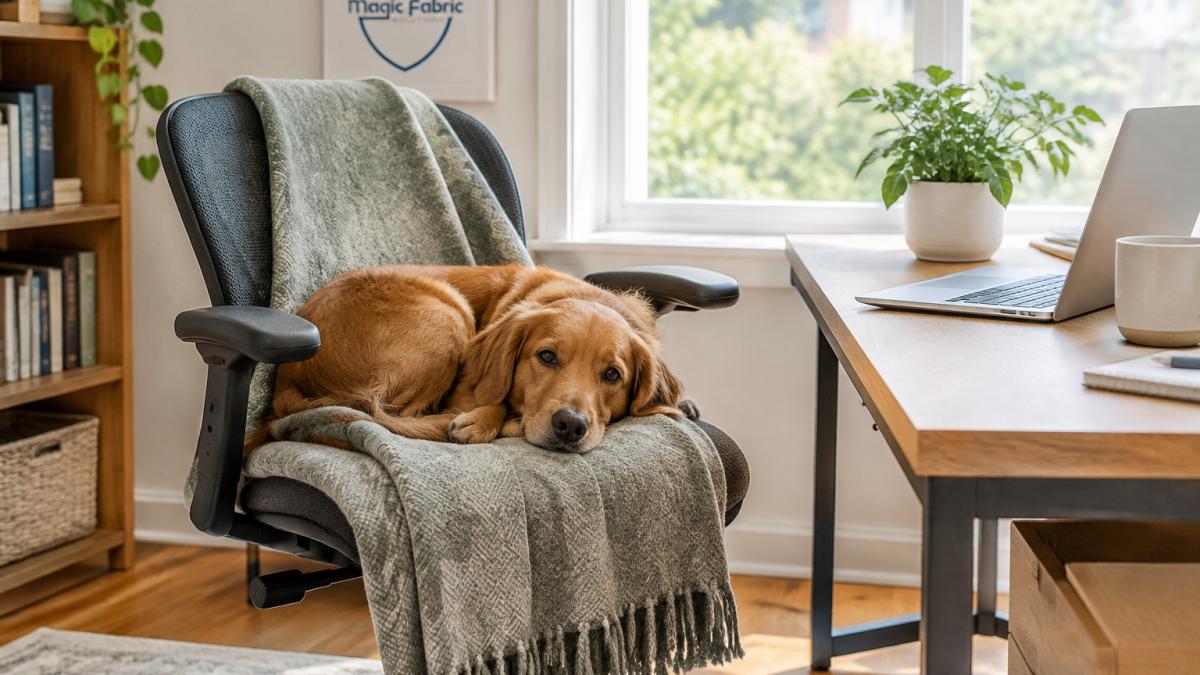
A throw that is too small leaves gaps where fur accumulates. One that is too large drags on the floor and catches on the wheels. Aim for coverage that wraps the seat and the back without hanging past the base.
Keeping a Throw Secure on Rolling and Ergonomic Chairs
Rolling and ergonomic chairs move constantly, which is the main reason throws slip. Look for throws with corner grips or a slightly textured underside that resists sliding on the seat.
Tuck the excess fabric behind the backrest, and check the fit after the first few days of use. If the throw still shifts, a smaller size often sits better than a larger one.
How to Keep Pet Hair Off Furniture at the Office
Keeping pet hair off office furniture is mostly a routine problem. Set a simple schedule so hair never builds up to the point where it is hard to remove.
- Shake or brush the throw each morning before the first meeting. For a step-by-step approach to protecting sofa from dog hair, the dedicated guide walks through each stage.
- Use a lint roller on the chair arms and seat edges during the afternoon.
- Wash the throw on a regular schedule, not only when it looks dirty.
Watch out: a throw that is never washed will eventually lose its release properties, so treat cleaning as part of the setup rather than an occasional chore.
How to Remove Pet Hair From Blankets and Throws
Removing hair from a throw works best when you act before it becomes embedded. A rubber squeegee or damp rubber glove pulls hair off without fighting the fibers, and a short tumble in the dryer on low can loosen what remains.
Avoid harsh scrubbing, which can roughen the surface and make it collect hair faster next time. Always check the care label first. Our guide on how to wash waterproof throws without damage explains how to keep their protective layers intact.
Caring for a Throw Used Daily in a Shared Workspace
A throw used daily by several people needs a more deliberate routine. Designate one person to check it weekly and wash it when hair, odor or stains build up.
Store a spare throw so the one in use can be washed without leaving a chair uncovered. Rotating two throws keeps the workspace looking consistent and extends the life of both.
Picking Your Office Throw Before Your Next Workday
Start with the chair you use most, measure it, and choose a fabric that releases hair and survives frequent washing. Confirm that the size covers the seat and backrest, and that the throw has a way to stay put on a rolling base.
Magic Fabric™ throws are built with a patented fabric that absorbs spills and resists odor, and they are machine washable. If you want to see how the throws fit your setup, you can shop the pet throws and covers.
Frequently Asked Questions
What kind of fabric does pet hair not stick to?
Tightly woven synthetic fabrics such as microfiber and nylon usually release pet hair more easily than loose knits, velvet or fleece. Smooth, tight weaves give hair less surface to grip, so a quick pass with a lint roller or damp cloth removes most of it. Leather and treated synthetic upholstery also wipe clean well. Check the care label before buying, and choose a throw that you can machine wash on a regular schedule so the surface keeps releasing hair over time.
How do you keep pet hair off an office chair?
Use a throw with a tight weave that fits the seat and backrest without bunching, then clean it daily with a rubber or damp-cloth tool. Vacuum the chair base and casters weekly because hair collects around the wheels and under the seat. Keeping a throw secure matters on rolling chairs, so choose one with a fit that stays in place when you sit and stand. Washing the throw every one to two weeks in a shared office keeps hair from building up.
How often should you wash a throw used to protect office seating?
Wash a throw used daily in a shared office about once every one to two weeks, and sooner if an animal has an accident or the throw starts holding odor. Machine wash on a gentle cycle in cold water and tumble dry on low, following the care label. Frequent washing keeps the fabric releasing hair and prevents oil and dander from building up, which extends the life of the throw.
How do you remove pet hair from a washable throw?
Shake the throw outdoors first, then use a rubber squeegee or a damp microfiber cloth to lift loose hair. For stubborn hair, run the throw through a dryer on low heat for about ten minutes, which loosens hair so it can be removed with a lint roller. Washing on a gentle cycle with the lint filter cleaned afterward prevents hair from clogging the machine and redepositing on other items.
